THE QUICK TAKE
- Check the shoes actually worn indoors and outdoors.
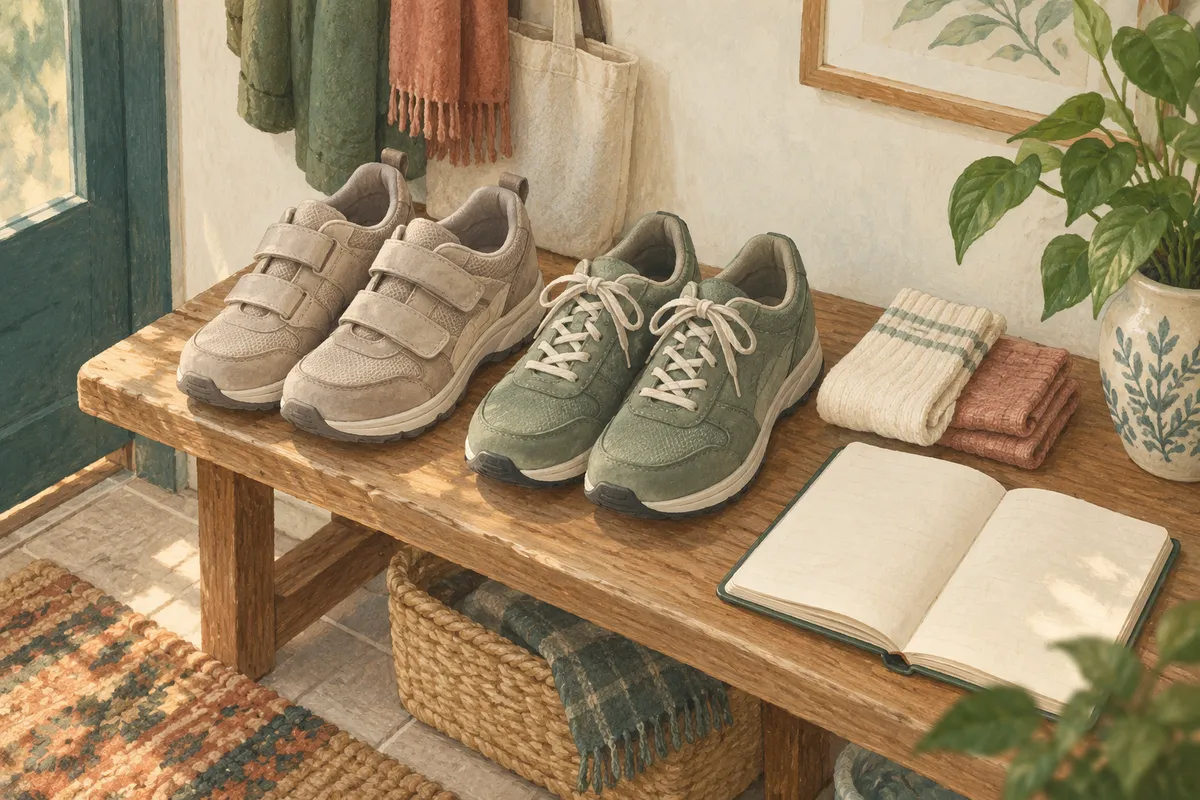
- Consider fastening and putting shoes on as part of fit.
- Seek professional advice for foot pain, changes, or specialized footwear needs.

Start with the shoes your parent actually wears
Ask which pair is used on a normal morning, for the bathroom route, and for outdoor errands. A new pair stored in a closet contributes little if the old slippers are the practical choice. Find out why: the new shoes may be awkward to fasten, uncomfortable, or kept far from where dressing happens. Those reasons shape the next decision.
Inspect the existing pair together while seated. Look for a sole worn smooth, a damaged fastening, or a stretched upper that no longer holds the foot comfortably. Record concerns without turning the inspection into a walking test. If you are unsure whether a shoe suits the person's needs, bring it to a qualified fitting or healthcare professional.
CDC's feet and footwear guide cautions about worn slippery soles, loose footwear, and walking in socks alone. Use those observations as a starting point for a review, not as proof that one replacement will prevent every fall.
Ask about fit and comfort
Ask for both feet to be measured and explain any existing foot concerns or prescribed devices. CDC advises attention to appropriate width and length. Do not assume that a size remembered from years ago is still the right starting point, or that ordering a larger size fixes every tight spot.
The fitting should consider what the person will actually wear with the shoe, including their usual socks and any professionally prescribed insert. Ask how to recognize a poor fit and what adjustments are appropriate. A toe box, fastening, and upper all affect the experience; marketing language such as comfort shoe does not answer those questions.
Pain, a wound, a new change in sensation, or another foot concern belongs with an appropriate healthcare professional. Do not solve it by guessing at inserts or asking your parent to break in an uncomfortable shoe. If specialized footwear is needed, ask who can assess and supply it, and clarify costs and return terms before buying.
Compare the sole, fastening, and everyday effort
A shoe needs to stay on the foot and suit its intended use. Ask the fitter about secure fastening that your parent can manage, adequate support, and a suitable sole. Mayo Clinic recommends properly fitting, sturdy footwear with nonskid soles as part of fall prevention. A general slip-resistant claim is not a guarantee on every wet or contaminated surface.
Consider the complete dressing routine. If fastening requires awkward bending or someone else's help, discuss appropriate options with a therapist or fitter. Do not replace one problem with another by choosing loose backless footwear simply because it is easy to slide into. Ask whether an alternative fastening or professionally recommended dressing aid meets the person's needs.
Fastening
- Question to ask
- Can it be secured and used comfortably?
- Trade-off to discuss
- Ease of dressing versus holding the foot
Sole
- Question to ask
- Is it suitable for the intended setting?
- Trade-off to discuss
- No universal traction guarantee
Upper and toe box
- Question to ask
- Does the fit accommodate this foot?
- Trade-off to discuss
- Room versus unwanted movement
Existing insert
- Question to ask
- Is it compatible with the selected shoe?
- Trade-off to discuss
- Professional fit may be needed
Return terms
- Question to ask
- Can an unsuitable fit be returned?
- Trade-off to discuss
- Restrictions after outdoor use
Prepare for shopping without a risky trial
Bring the current shoes, usual socks, relevant instructions, and a short description of the routine. Ask your parent about appearance and comfort preferences before narrowing the options. A technically promising shoe that they dislike or cannot put on may stay unused. Keep the selection focused on a few suitable choices rather than a long list of online ratings.
Let the professional decide what fitting checks are appropriate. Do not ask your parent to walk quickly, balance on one foot, or negotiate stairs to prove a shoe works. If ordinary movement is difficult or concerning, seek advice about the movement as well as the footwear.
For an online purchase, read the actual sizing information and return policy. Keep packaging until fit has been appropriately reviewed. A family member's hand pressing the toe or reading a customer review does not replace a qualified fitting where one is needed. Do not assume a model labeled orthopedic is a prescribed treatment.

Make the chosen pair part of daily life
Agree on where shoes will be kept, how your parent will put them on, and who can help if needed. Store them away from the walking route while keeping them accessible. A shoe left at the bedroom doorway can become another obstacle, even if it was chosen carefully.
At a later check, ask whether the pair is actually being worn and what feels difficult. Watch for damage to fasteners and wear to the sole. Use the manufacturer's care instructions rather than applying a home treatment that may alter the material. If comfort or foot condition changes, seek advice rather than treating the original fitting as permanent.
Footwear for fall prevention is one part of the plan. Pair this review with lighting, clear routes, and professional input about walking concerns. End with a specific next step: arrange a fitting, ask about a foot problem, or make the agreed pair easier to access during dressing.
Separate fit concerns from a routine replacement purchase
Compare shoes for their intended use: inside the home, the usual outdoor route, or an appointment. Mayo Clinic recommends properly fitting, sturdy, flat footwear with nonskid soles. That general advice does not establish individual suitability or prove that an anti-slip label applies to every surface.
Ask what is uncomfortable or inconvenient about the current pair. Worn fastenings, unsuitable fit and a new foot concern are different reasons to pause. Record the model and size after the choice is made, and check return terms before use that could affect eligibility.
If pain or another foot-related concern affects the choice, ask an appropriate clinician rather than trying to solve it through a generic shoe ranking.
The heel slips or the shoe feels poorly fitted
- Next action
- Discuss fit with a suitable footwear professional; involve the care team when needed.
- Check before calling it done
- Advice addresses the person and the intended use.
Fastenings or soles show wear
- Next action
- Inspect the actual pair and discuss replacement options.
- Check before calling it done
- The replacement addresses the problem, not just the same size label.
The reason to buy is an anti-slip claim
- Next action
- Ask about fit, intended use and product information rather than relying on a slogan.
- Check before calling it done
- Those details inform the choice; surface conditions still vary.
New pain or a foot concern affects the choice
- Next action
- Raise it with an appropriate clinician before treating it as a shopping problem.
- Check before calling it done
- Individual advice is understood before purchasing around the concern.
Safety guidance: Mayo Clinic: Fall prevention and professional assessment. Family examples and completion checks are editorial planning suggestions.
Check fitting advice and the returns policy
Before paying, ask exactly how the retailer allows fit to be reviewed. Record whether an indoor fitting affects returns, the deadline, any delivery charge, and conditions for packaging or labels. Policies differ; this guide does not promise that used or medically supplied footwear can be returned.
Bring the intended socks and any professionally prescribed insert to an appropriate fitting. Ask the fitter to review the selected pair with your parent rather than relying only on a size label. CDC recommends having feet measured for length and width. Keep specialized foot concerns with the appropriate healthcare or fitting professional.
During the permitted review, record your parent's observations in their own words: fastening is awkward, a particular area feels uncomfortable, or the pair is hard to put on. Do not ask them to test traction on a wet floor or perform a balance challenge. Send the concern to the fitter rather than adjusting a prescribed insert yourself.
Keep the receipt, model, selected size, and relevant advice together until the decision is settled. If a return or exchange is needed, describe the problem and confirm the next option with the fitter. A convenient return process is useful, but it does not replace a suitable professional assessment when one is needed.
Fill in the template, then copy it to your own document. Edits stay on this page only and are lost when you reload or leave. Avoid private health details.
Common questions
Are slippers suitable for indoor use?
Assess the particular pair and person. Loose, floppy, backless, or slippery footwear raises concerns in official guidance. Ask a fitter or healthcare professional about a suitable indoor option.
Do nonslip soles guarantee safety?
No. Fit, shoe condition, the surface, and the person's needs still matter. Treat a traction claim as a feature to examine, not a guarantee against falls.
Should I buy inserts to improve balance?
Do not prescribe an insert from a general guide. Ask a qualified professional about the concern, compatibility, and whether an orthotic or another intervention is appropriate.
Sources & further reading
These public resources inform the safety guidance in this article. The household planning examples are our editorial suggestions.
- CDC STEADI: Feet and Footwear for Older Adults
- Mayo Clinic: Fall Prevention
Overview of home hazards, lighting, footwear, and questions for the healthcare team.
- CDC: Preventing Falls and Hip Fractures
Educational guidance, not a clinical assessment or personalized medical advice. This article has not been individually reviewed by a licensed clinician. Read our editorial policy.