THE QUICK TAKE
- Keep the room's purpose and your parent's preferences central.
- Check routes with ordinary belongings and visitors in mind.
- Give remotes, charging equipment, and hobby supplies consistent places.

Start at the place your parent enjoys using
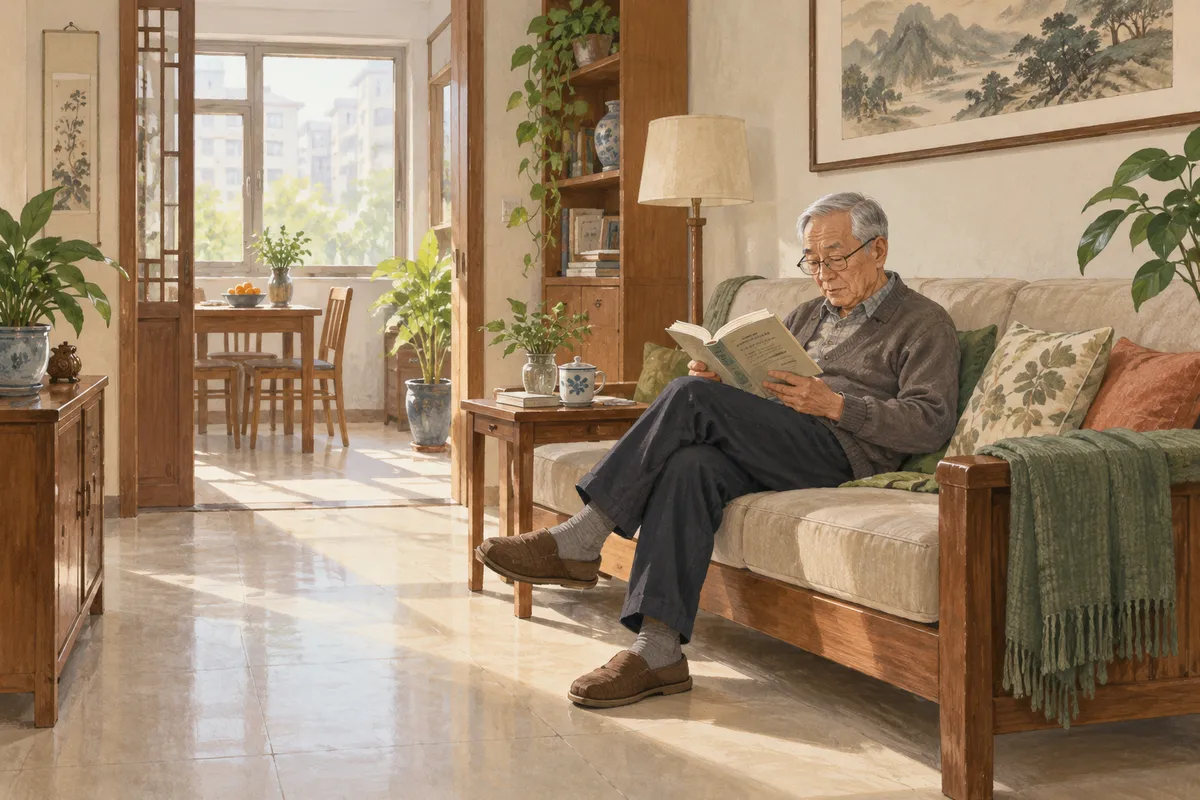
Ask which seat and activities matter most. Where do they read, take calls, watch television, or do a puzzle? Which belongings do they like nearby? Their answers help distinguish useful storage from obstacles, rather than treating every small object as clutter.
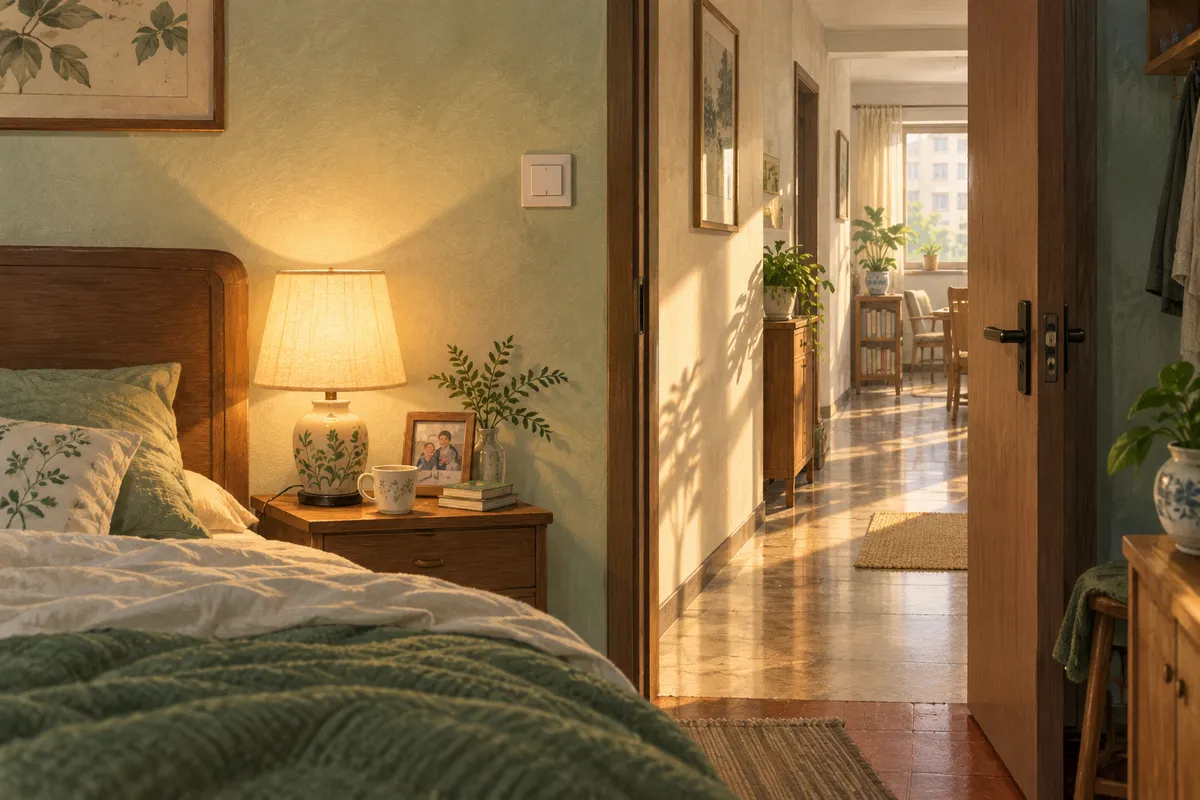
Map the route from the entrance to the seating area and onward to the kitchen or bathroom. Inspect it yourself without asking your parent to demonstrate a difficult walk or transfer. Record their concerns in their own words, especially if a room that looks familiar now feels harder to use.
Agree on one task before moving furniture. If your parent likes a side table, discuss how it is used and whether its location creates a problem. Moving it away may simply make the phone or lamp harder to reach. Review the whole activity rather than making the room look empty.
Check the route when the room is in ordinary use
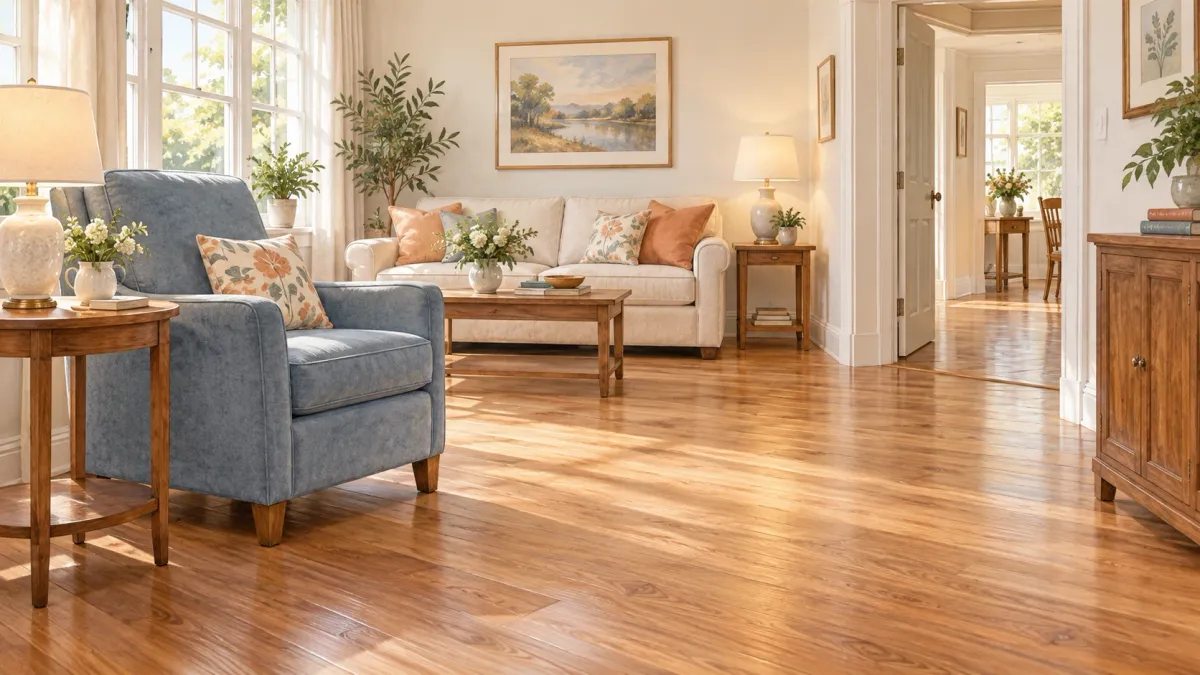
CDC's checklist includes furniture and belongings that obstruct walking routes. Inspect the living room with its usual items present: a laundry basket, reading pile, footstool, or bag beside the chair. Ask what gets moved at different times of day.
Discuss a permanent place for items that repeatedly land in the route. The point is not to win an argument about possessions, but to make the room easier to restore. For example, a family might agree that hobby supplies return to a nearby shelf after use. That is an organizing example, not a universal storage prescription.
Check how a visitor changes the layout. An extra chair or a child's bag may occupy the route your parent normally uses. Give guests a place for belongings and explain the agreed arrangement briefly. Do not rely on your parent to move heavy furniture after everyone leaves.
Make everyday items easy to find without adding new obstacles
List the essentials for the chosen activity: phone, remote, lamp control, reading glasses if used, or hobby materials. Ask which locations are convenient. Avoid a complicated organizer with labels your parent does not understand or compartments that are difficult to use.
Mayo Clinic recommends removing electrical and phone cords from walkways. Check charging and lamp cables as part of the arrangement. Record where a cable crosses the route, and consider an appropriate alternative with your parent. Electrical alterations need qualified help; do not solve a cable problem by introducing another loose cable elsewhere.
Make returning items part of the visitor handoff. A helper who charges the phone should know where it belongs afterward. If photographs help explain the setup, obtain permission and keep them limited to the relevant area. The arrangement needs to work for its everyday user, not only for the person who designed it.
Keep seating and pet routines on separate action lists
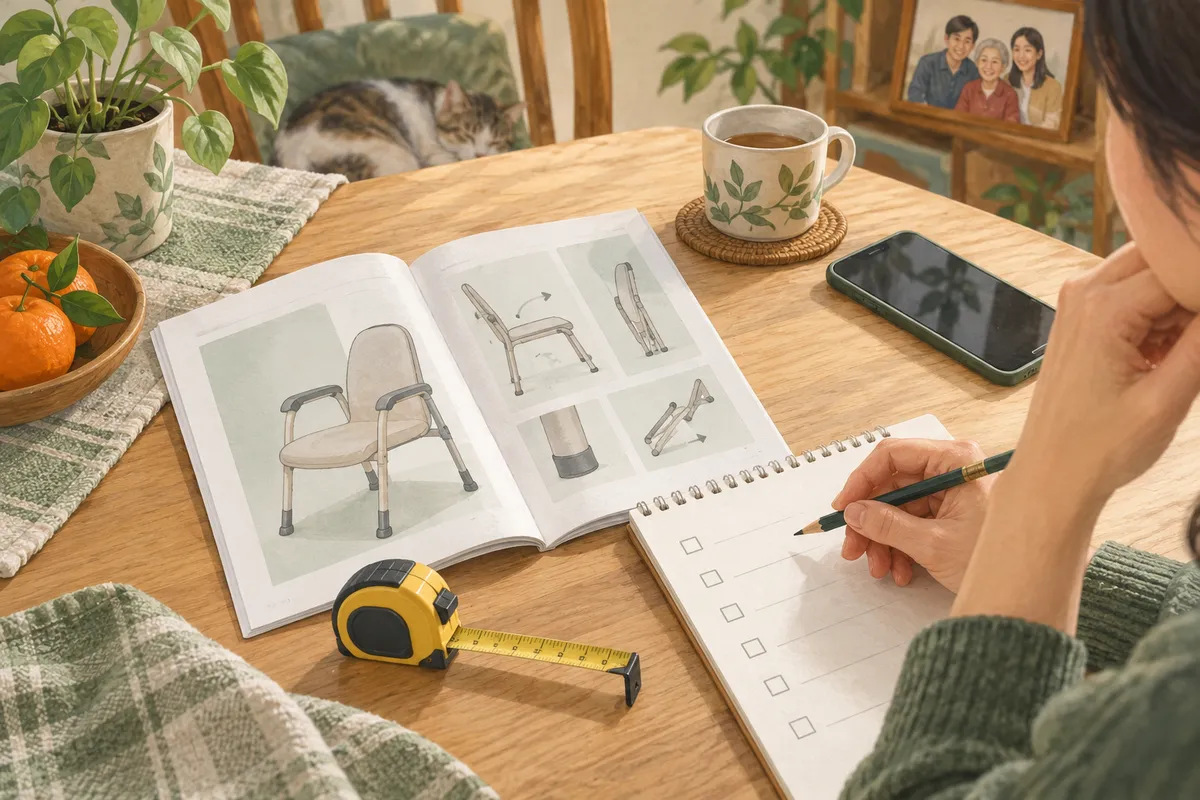
Ask whether getting into or out of a seat has become difficult. Do not ask your parent to demonstrate without their usual support, and do not add cushions, risers, or support equipment as an improvised fix. Discuss seating and transfers with an appropriate professional.
Mayo Clinic recommends individualized help when needed, including possible occupational therapy input. A clear description of the task and concern helps prepare that discussion. A chair marketed for older adults is not automatically appropriate for the person or the room.
Consider the pet's routine too: where toys, bedding, and bowls tend to land, and who handles them. Agree on locations that fit both the household and the animal's care. Keep visiting children and guests informed. Do not move a beloved pet's belongings without discussing how the new arrangement will be maintained.
Plan a quick reset after visitors and activities
Agree what the room should look like when an activity or visit ends. That can mean returning the extra chair, putting bags in their usual place, and restoring the phone and lamp controls. Assign the task to someone available rather than leaving your parent to undo an arrangement they did not choose.
Ask what happens when a hobby continues across several days. An unfinished puzzle or craft does not need to disappear after each session, but the household can agree where supplies remain between uses. Keep that arrangement in the plan so a well-meaning visitor does not undo it.
Keep repair issues separate: damaged flooring, a faulty lamp, or furniture your parent wants assessed. Record the next action and responsible person. If a recurring problem remains despite reminders, review the arrangement instead of assuming the household is simply careless.
Revisit living room safety for older adults after changes in furniture, hobbies, visitors, or mobility. Ask whether the room still feels welcoming and usable. Report new falls, near falls, or unsteadiness to the healthcare team. A room reset is a useful household habit, but it is not a professional assessment or a promise that every fall can be prevented.
Send guests a short room-use note
Prepare a message your parent is comfortable sharing before a group visit: 'We are looking forward to seeing you. Please put bags in [place]. If we need extra seating, check with [name] before moving furniture. Before leaving, please help return [items] to their usual places.' Fill in the details together and send only the information guests need.
Agree who will greet people and handle the reset so your parent is not left to manage both. A guest bringing children can be asked to keep their belongings in the agreed spot and help put shared supplies away. Do not frame the message as a judgment about a child's behavior or your parent's ability. It is a household arrangement for everyone using the room.
After the visit, ask whether the plan supported the gathering. Did the bag location work? Did someone restore the borrowed chair? Were the phone and remote left where your parent expected? Change the note if the arrangement was inconvenient instead of treating a first attempt as permanent. Keep requests about furniture, belongings, and cleanup separate from any need for individual assistance.
Guests should not interpret the note as training to help with standing, walking, or transfers.
Welcome and bags
- Named person / agreed place
- ___ / ___
Extra furniture
- Named person / agreed place
- Check with: ___
Departure reset
- Named person / agreed place
- Person: ___; items: ___
Fill in the template, then copy it to your own document. Edits stay on this page only and are lost when you reload or leave. Avoid private health details.
Common questions
Should we remove every coffee table and decorative item?
Discuss how items are used and inspect the actual routes. Agree on targeted changes with your parent rather than stripping the room by default. Keep possessions they value in the planning conversation.
Can cushions make a low chair suitable?
Do not improvise seating changes to solve a difficult transfer. Ask an appropriate professional to assess the chair and the person's needs before adding equipment or altering how the seat is used.
What should guests know?
Keep instructions practical: where bags and extra chairs go, which route stays clear, and where agreed essentials belong. Share the arrangement with your parent's permission and avoid unnecessary personal health details.
Sources & further reading
These public resources inform the safety guidance in this article. The household planning examples are our editorial suggestions.
- CDC: Check for Safety home checklist
Home-hazard checklist covering floors, stairs, kitchens, bathrooms, and bedrooms.
- CDC STEADI — patient and caregiver resources
Official brochures for older adults and family caregivers; includes downloadable home-safety material.
- Mayo Clinic: Fall prevention
Overview of home hazards, lighting, footwear, and questions for the healthcare team.
Educational guidance, not a clinical assessment or personalized medical advice. This article has not been individually reviewed by a licensed clinician. Read our editorial policy.