THE QUICK TAKE
- Choose around the bathing task and the actual bathroom.
- A chair and a transfer bench serve different arrangements.
- Plan fitting, instructions, cleaning, and follow-up as well as purchase.

Identify which part of bathing needs help
Ask your parent whether the concern is standing for the duration of a shower, stepping over a tub side, sitting down, or reaching soap and water controls. Do not assume that every difficulty calls for the same seat. Discuss the problem with the healthcare team and ask whether an occupational therapist should assess the routine.
Describe the bathroom and existing equipment. Is it a tub with a shower, a separate shower enclosure, or another layout? Note the door or curtain, controls, fixed supports, and space outside the bathing area. Photographs can help with planning when taken with permission, but they cannot establish safe use or final fit by themselves.
Mayo Clinic includes a sturdy bathing seat and handheld shower among possible aids. Its bathroom guidance also discusses fitting and accessible supplies. These sources support considering the whole arrangement. They do not mean every person should buy a chair or use one without individualized advice.
Compare shower chairs, stools, and transfer benches
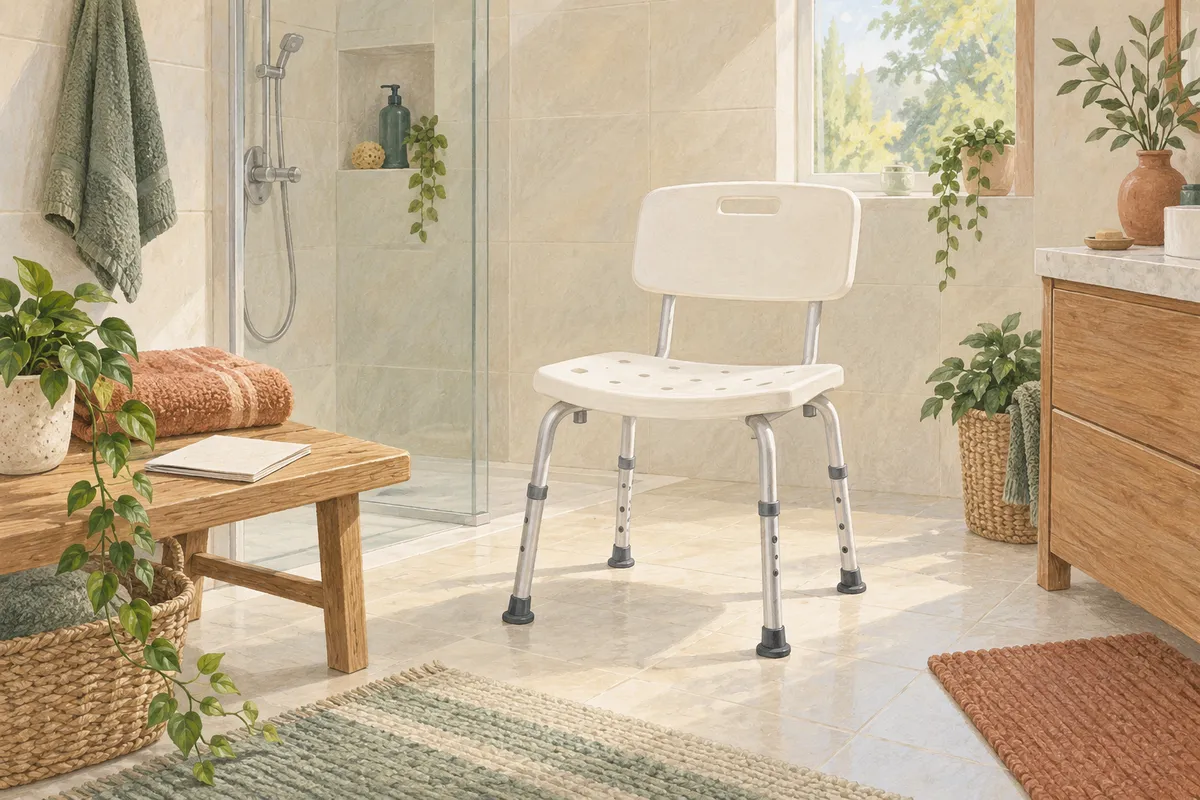
Read the intended use of each actual product. A compact stool, a chair with a back, and a bench that spans the tub edge are different designs. They may require different space and movement. The category name alone does not tell you whether the product supports your parent's routine.
Ask the assessor which category should be considered and why. Discuss support needs, the available area, how someone enters and leaves, and whether help is required. Do not copy a transfer method from a shopping video. If a technique is needed, it should be taught for the individual and the selected equipment.
Shower stool
- Planning question
- Is this amount of support appropriate?
- Potential constraint
- No back or arms on some models
Shower chair
- Planning question
- Do the seat and supports suit the person?
- Potential constraint
- Footprint can reduce usable space
Tub transfer bench
- Planning question
- Is this arrangement appropriate for tub access?
- Potential constraint
- Space needed inside and outside tub
Wall-mounted seat
- Planning question
- Can the structure support the specified installation?
- Potential constraint
- Qualified assessment and installation
Wheeled bathing equipment
- Planning question
- Is specialist equipment and assistance needed?
- Potential constraint
- Individual assessment and instructions
Check fit and the space around the seat
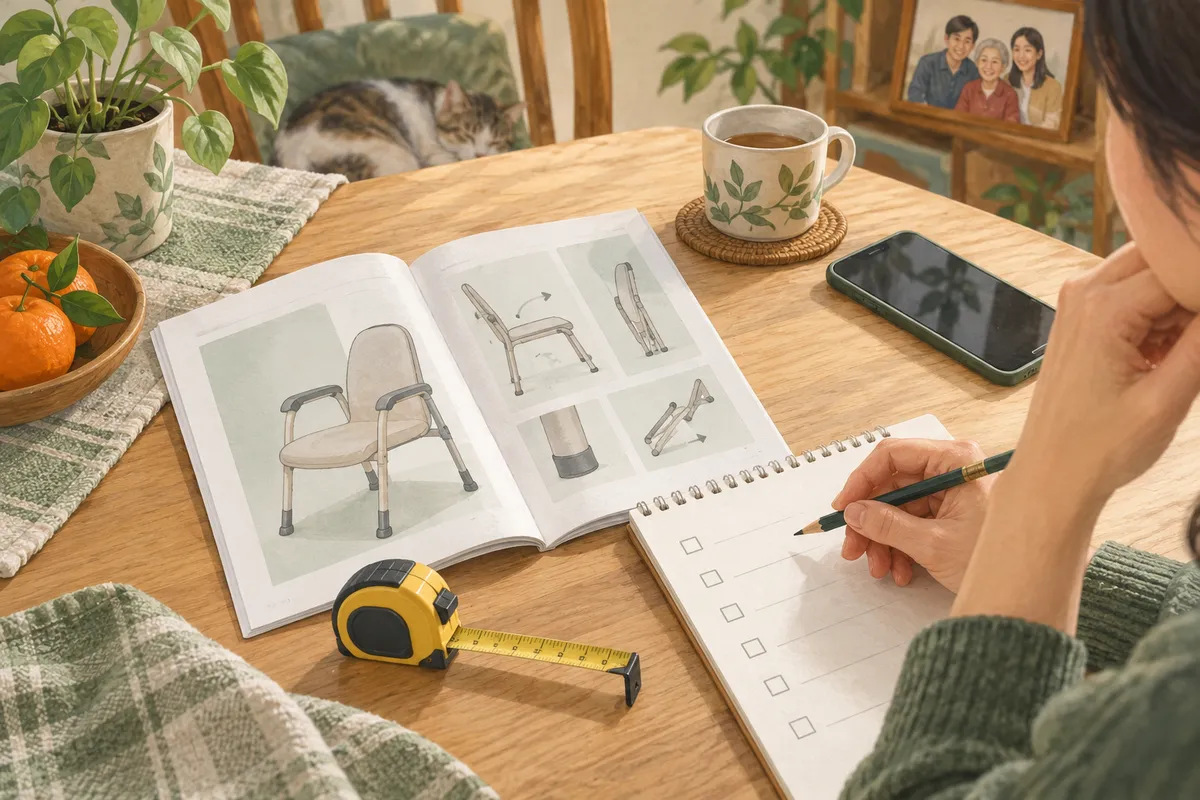
Ask about the appropriate seat height, support, and position for your parent. Do not set it solely from an internet picture or adjust it while someone is sitting on it. Follow the instructions and professional advice for the model. Confirm any stated user limits and intended environment before purchase, including whether the product is designed for wet-area use.
The chair's overall size matters as much as the seat. Ask which dimensions the supplier needs and who will verify them. A product might fit through the door but conflict with the shower screen, slope of the floor, or controls. A bathroom needs room for the actual routine and any helper, not just room to store a chair.
Check where the showerhead, soap, and towels will be within the planned arrangement. Unreachable supplies can undermine the purpose of seated bathing. Do not relocate fixtures yourself or add an unstable shelf; ask appropriate professionals how to make the layout usable.
- Correct intended use and user limits
- Seat and support suited to the person
- Space for the chair and the whole routine
- Controls and supplies accessible from the planned position
- Instructions for fitting and checking the equipment
Arrange setup and teaching before first use
Clarify who assembles, fits, or installs the product and who explains its use. A delivery service may only leave a box; assembly does not necessarily include individual fitting. For a permanently mounted seat, obtain qualified advice about the structure and installation. Keep the product instructions available for everyone who helps.
Ask what should be checked before use and what signs mean the equipment needs attention. Follow the exact instructions for adjustable legs, locking parts, and other components. Do not improvise wedges, add furniture cushions not intended for the device, or combine products in a way the manufacturer has not authorized.
If your parent needs assistance with bathing movements, arrange appropriate teaching for both the person and the helper. A relative should not invent a lifting technique or assume they can manage because the seat has armrests. Ask what interim routine is appropriate while advice or equipment is pending.

Check use, cleaning, and changes over time
After the recommended setup and teaching, ask your parent whether the arrangement is comfortable and usable. If the seat stays unused, find out why before buying another. The problem might be controls, space, discomfort, or a routine that still needs assistance. Return to the assessor with those details.
Follow the manufacturer's cleaning, drying, and inspection instructions. Keep the area free of unnecessary products and record any wear, movement, or damage that needs attention. Store the equipment as instructed so it does not block another route. Check current exact-model recalls when buying, including used equipment, and retain identifying details.
Shower chairs for older adults are a category to assess, not an automatic shopping answer. Review the setup when health needs, the bathroom, or other equipment changes. Finish the project with a written record of the model, fitting advice, instructions, and the professional contact for unresolved concerns.
Compare the whole bathing setup before choosing a seat
A shower chair, bath seat and transfer bench can serve different purposes; the name alone does not establish suitability. Mayo Clinic includes a bath seat among possible measures and suggests occupational therapy input when needed. Choosing equipment for a person's bathing activity requires more than checking that it appears to fit in a photograph.
Keep bathroom details and the activity question together. Ask a qualified professional about suitability; ask the supplier for the exact model, dimensions, intended use and instructions. Clarify returns, assembly and parts without assuming used bathing equipment can be returned. This comparison prepares those conversations. It does not teach transfers or ask the parent to test an uncertain setup.
The bathroom has a tub rather than an open shower
- Next action
- Describe the actual space and activity to the professional advising on suitability.
- Check before calling it done
- The recommendation addresses both bathroom and person.
Several models look similar online
- Next action
- Compare dimensions, intended use, adjustment details and manufacturer instructions.
- Check before calling it done
- The chosen model meets agreed requirements; the photo is not the specification.
Assembly or setup responsibility is unclear
- Next action
- Ask who completes the instructed setup and addresses questions.
- Check before calling it done
- Someone accepts the task and has the manufacturer instructions.
Cleaning or replacement parts are uncertain
- Next action
- Request care instructions, parts availability and the supplier contact.
- Check before calling it done
- The regular helper knows the routine and how to report damage.
Safety guidance: Mayo Clinic: Fall prevention and professional assessment. Family examples and completion checks are editorial planning suggestions.
Ask about setup, cleaning and repairs
Before ordering, ask who will handle assembly, fitting, and questions after delivery. Confirm what the supplier means by setup: opening a box, assembling parts, and individualized fitting are different services. If the recommendation came from a therapist, clarify which supplier decisions need to be checked with that professional.
Ask for the instructions for the exact model before committing when possible. Read the stated cleaning, inspection, storage, and replacement guidance. If information is missing or unclear, ask the manufacturer or supplier rather than inventing a maintenance schedule. Check whether replacement parts are available and how an unsuitable or damaged item is handled.
Agree on a practical household maintenance arrangement. One person might keep the instructions and another arrange supplier contact if a problem appears. The parent and anyone helping should know where to report a loose component or difficulty using the setup. Do not keep using damaged equipment just because a service appointment is inconvenient; seek appropriate advice.
Keep a short product record with the model, delivery date, fitting contact, and unresolved questions. This is an editorial organizational aid, not proof of safety. Review it when the bathroom or the person's needs change so a replacement is chosen from current advice, rather than copied automatically from the previous purchase.
Assembly and fitting service
- Who needs the answer?
- Parent and assessor
Cleaning and inspection instructions
- Who needs the answer?
- People maintaining equipment
Fault and parts contact
- Who needs the answer?
- Household coordinator
Returns or unsuitable fit
- Who needs the answer?
- Buyer and supplier
Fill in the template, then copy it to your own document. Edits stay on this page only and are lost when you reload or leave. Avoid private health details.
Common questions
Is a shower chair the same as a transfer bench?
No. Designs and intended arrangements differ. A transfer bench may span a tub edge, while a shower chair serves a different setting. Ask which category suits the individual bathing task.
Can we use an ordinary plastic chair in the shower?
Do not assume household furniture is suitable for bathing support. Use equipment intended for the task, with appropriate instructions, fit, and professional advice where needed.
Can a chair replace grab bars?
Do not assume the products are interchangeable. They address different parts of the routine. An assessor can advise which supports and layout suit the person's movement and needs.
Sources & further reading
These public resources inform the safety guidance in this article. The household planning examples are our editorial suggestions.
- Mayo Clinic: Occupational Therapist's Guide to Preventing Falls in the Bathroom
- US Access Board: ADA Guide to Bathing Rooms
- CPSC: Recalls and Product Safety Warnings
Use the exact product name and model to check recall notices before a purchase or reuse.
- Mayo Clinic: Fall Prevention
Overview of home hazards, lighting, footwear, and questions for the healthcare team.
Educational guidance, not a clinical assessment or personalized medical advice. This article has not been individually reviewed by a licensed clinician. Read our editorial policy.